How to Design a Tic-Tac-Toe Game?
- 时间:2020-09-24 11:41:27
- 分类:网络文摘
- 阅读:152 次
Design a Tic-tac-toe game that is played between two players on a n x n grid.
You may assume the following rules:
- A move is guaranteed to be valid and is placed on an empty block.
- Once a winning condition is reached, no more moves is allowed.
- A player who succeeds in placing n of their marks in a horizontal, vertical, or diagonal row wins the game.
Example:
Given n = 3, assume that player 1 is “X” and player 2 is “O” in the board.
Could you do better than O(n^2) per move() operation? Could you trade extra space such that move() operation can be done in O(1)? Could you trade extra space such that move() operation can be done in O(1)?
Tic-Tac-Toe Game Design with O(1) Move
Your TicTacToe object will be instantiated and called as such:
1 2 | TicTacToe* obj = new TicTacToe(n); int param_1 = obj->move(row,col,player); |
TicTacToe* obj = new TicTacToe(n);
int param_1 = obj->move(row,col,player);
When a player makes a move, we need to check if he/she wins the game. A simple solution is to check O(N^2) grid for horizontal, vertical and two diagonals to see if they are all occupied by this player. However, a better solution that has O(1) time would be to trade space for time. That is, we use O(N) space to record the number of each players in each row, column and two diagonals.
1 2 3 4 5 6 7 8 9 10 11 12 13 14 15 16 17 18 19 20 21 22 23 24 25 26 27 28 29 30 31 32 33 34 35 36 37 38 39 40 41 42 43 44 45 46 47 48 49 | class TicTacToe { public: /** Initialize your data structure here. */ TicTacToe(int n) { board.resize(n); rowc[0].resize(n); rowc[1].resize(n); colc[0].resize(n); colc[1].resize(n); d[0][0] = 0; d[0][1] = 0; d[1][0] = 0; d[1][1] = 0; for (int i = 0; i < n; ++ i) { board[i].resize(n); rowc[0][i] = 0; rowc[1][i] = 0; colc[0][i] = 0; colc[1][i] = 0; } } /** Player {player} makes a move at ({row}, {col}). @param row The row of the board. @param col The column of the board. @param player The player, can be either 1 or 2. @return The current winning condition, can be either: 0: No one wins. 1: Player 1 wins. 2: Player 2 wins. */ int move(int row, int col, int player) { board[row][col] = player; int n = board.size(); if (++rowc[player - 1][row] == n) return player; if (++colc[player - 1][col] == n) return player; if (row == col) { if (++d[player - 1][0] == n) return player; } if (n - row - 1 == col) { if (++d[player - 1][1] == n) return player; } return 0; } private: vector<vector<int>> board; int d[2][2]; vector<int> rowc[2]; vector<int> colc[2]; }; |
class TicTacToe {
public:
    /** Initialize your data structure here. */
    TicTacToe(int n) {
        board.resize(n);
        rowc[0].resize(n);
        rowc[1].resize(n);
        colc[0].resize(n);
        colc[1].resize(n);
        d[0][0] = 0;
        d[0][1] = 0;
        d[1][0] = 0;
        d[1][1] = 0;
        for (int i = 0; i < n; ++ i) {
            board[i].resize(n);
            rowc[0][i] = 0;
            rowc[1][i] = 0;
            colc[0][i] = 0;
            colc[1][i] = 0;
        }
    }

    /** Player {player} makes a move at ({row}, {col}).
        @param row The row of the board.
        @param col The column of the board.
        @param player The player, can be either 1 or 2.
        @return The current winning condition, can be either:
                0: No one wins.
                1: Player 1 wins.
                2: Player 2 wins. */
    int move(int row, int col, int player) {
        board[row][col] = player;
        int n = board.size();
        if (++rowc[player - 1][row] == n) return player;
        if (++colc[player - 1][col] == n) return player;
        if (row == col) {
            if (++d[player - 1][0] == n) return player;
        }
        if (n - row - 1 == col) {
            if (++d[player - 1][1] == n) return player;
        }
        return 0;
    }
private:
    vector<vector<int>> board;
    int d[2][2];
    vector<int> rowc[2];
    vector<int> colc[2];
};Instead of storing the counters for each player, We can alternatively reduce the space usage to half i.e. increment the counter for player 1 and decrement the counter for player 2. Then we need to check if the absolute value of the counter equals to N.
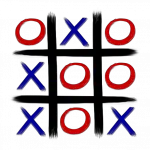
tic-tac-toe
–EOF (The Ultimate Computing & Technology Blog) —
推荐阅读:曝光13种假保健食品检出药物成分 高纤维饼干口感好是靠油脂“润滑” 所谓非油炸蔬果干食品同样不健康 儿童不宜吃含化学合成甜味剂的食品 规范使用食品添加剂不危害人体健康 消费者对保健食品不要盲目的迷恋 广西已暂停销售多个品牌保健食品 无公害蔬菜如何用感官简单进行识别 食品安全危机期,谁来保障吃的安全? 夏季熬制“开花”绿豆汤防暑又解毒
- 评论列表
-
- 添加评论