The Monotone Stack Implementation in Python
- 时间:2020-09-18 17:01:02
- 分类:网络文摘
- 阅读:156 次
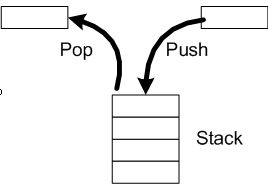
Stack-Operation-in-C-Programming
A stack is a first-in-last-out (FILO) data structure.
We all know that the list/array in Python is very powerful, that it can be used as a stack itself. For example, to create a stack in Python, we do this:
1 | st = [] |
st = []
Then, we can push an element to the stack using the list append() method.
1 2 3 4 5 | st.append(1) st.append(2) st.append(3) # now the stack has 3 elements [1, 2, 3] |
st.append(1)
st.append(2)
st.append(3)
# now the stack has 3 elements
[1, 2, 3]
We can check the length of the list in order to perform the stack.empty() test.
1 2 | def isEmptyStack(st): return len(st) == 0 |
def isEmptyStack(st):
   return len(st) == 0
The last element in the list/array will be useful, such as peeking the top of the stack:
1 2 | def peekStack(st): return st[-1] |
def peekStack(st):
   return st[-1]
Popping an element is even simpler with the array.pop() method – which removes the last element from the list/array and return it.. For example:
1 2 | def popStack(st): return st.pop() |
def popStack(st):
   return st.pop()
The Monotone Stack in Python
A Monotone stack is a stack, however, it preserves the orders of the elements in the stack from left to the right. For example, the Monotone decreasing stack looks like:
1 | st = [5, 4, 3, 2, 1] |
st = [5, 4, 3, 2, 1]
Now, if we now push another element, e.g. 3, to the stack. It will pop out elements that are smaller than 3 before 3 is pushed to the stack.
1 | st = [5, 4, 3, 3] # 2 and 1 will be removed |
st = [5, 4, 3, 3] # 2 and 1 will be removed
At anytime, the monotone stack will keep the elements in the stack in either increasing or decreasing order (monotone sequence). The Monotone stack is handy as it tells us the next larger-or-equal element. For example, in the above case, we know the next larger-or-equal number is 3.
1 2 3 4 | def pushMontoStack(st, ele): while len(st) > 0 and st[-1] < ele: st.pop() st.push(ele) |
def pushMontoStack(st, ele):
   while len(st) > 0 and st[-1] < ele:
       st.pop()
st.push(ele)Similarly, we can use the same data-structure i.e. array/list in Python to implement a montotone Queue.
–EOF (The Ultimate Computing & Technology Blog) —
推荐阅读:美丽的马嵬驿作文 回顾历史,自强不息作文500字 儿童节游必胜客作文 生活 感恩 由误解所想到的作文450字 我的家乡周口作文 三下乡中的失误和反省 六年级感恩父亲节作文1000字 手工纸剪小树数学题:用一张长45cm、宽21cm的手工纸,能剪几棵这样的小树? 数学题:两人轮流报数,每次只能报1或2,把两人报的所有数加起来
- 评论列表
-
- 添加评论