Lombok Code Template Tutorial: You Probably Don’t Need to
- 时间:2020-09-11 08:23:45
- 分类:网络文摘
- 阅读:143 次
Java is Verbose. And worse still, there is little Syntax Sugar.
Usually, we want a class that contains Data only. And we need getters and setters to wrap the private field. Also, we need to add the toString, equals, hashCode etc template methods – that are boring.
For example, here is a data class that contains only 1 private string field.
1 2 3 4 5 6 7 8 9 10 11 12 13 14 15 16 17 18 19 20 21 22 23 24 25 26 27 28 29 30 31 32 33 34 35 36 37 38 39 40 | package com.company; import java.util.Objects; public class HelloACM { private String data; public HelloACM(String data) { this.data = data; } public String getData() { return data; } public void setData(String data) { this.data = data; } @Override public boolean equals(Object o) { if (this == o) return true; if (!(o instanceof HelloACM)) return false; HelloACM helloACM = (HelloACM) o; return Objects.equals(getData(), helloACM.getData()); } @Override public int hashCode() { return Objects.hash(getData()); } @Override public String toString() { final StringBuilder sb = new StringBuilder("HelloACM{"); sb.append("data='").append(data).append('\''); sb.append('}'); return sb.toString(); } } |
package com.company;

import java.util.Objects;

public class HelloACM {
    private String data;

    public HelloACM(String data) {
        this.data = data;
    }

    public String getData() {
        return data;
    }

    public void setData(String data) {
        this.data = data;
    }

    @Override
    public boolean equals(Object o) {
        if (this == o) return true;
        if (!(o instanceof HelloACM)) return false;
        HelloACM helloACM = (HelloACM) o;
        return Objects.equals(getData(), helloACM.getData());
    }

    @Override
    public int hashCode() {
        return Objects.hash(getData());
    }

    @Override
    public String toString() {
        final StringBuilder sb = new StringBuilder("HelloACM{");
        sb.append("data='").append(data).append('\'');
        sb.append('}');
        return sb.toString();
    }
}You could imagine how this gets verbose if you have several fields to encapsulate in a single class. And these code are just basic – not containing much business logics – the presence of these code make the class less readable.
Using Lombok Library
Project Lombok https://projectlombok.org is a convenient way to solve this problem. All the above Java code can be replaced by the following clean and easy-to-understand code.
1 2 3 4 5 6 | package com.company; @Data public class HelloACM { private String data; } |
package com.company;

@Data
public class HelloACM {
    private String data;
}That is it. You just need to add the @Data before the class definition – and all those boilerplate methods will be provided by the Lombok Library. The code is still clean.
In order for this to work, you will need to download the lombok.jar and provide it in the class path. Alternatively, if you are using IDE such as Intellij, you could download the plugin:
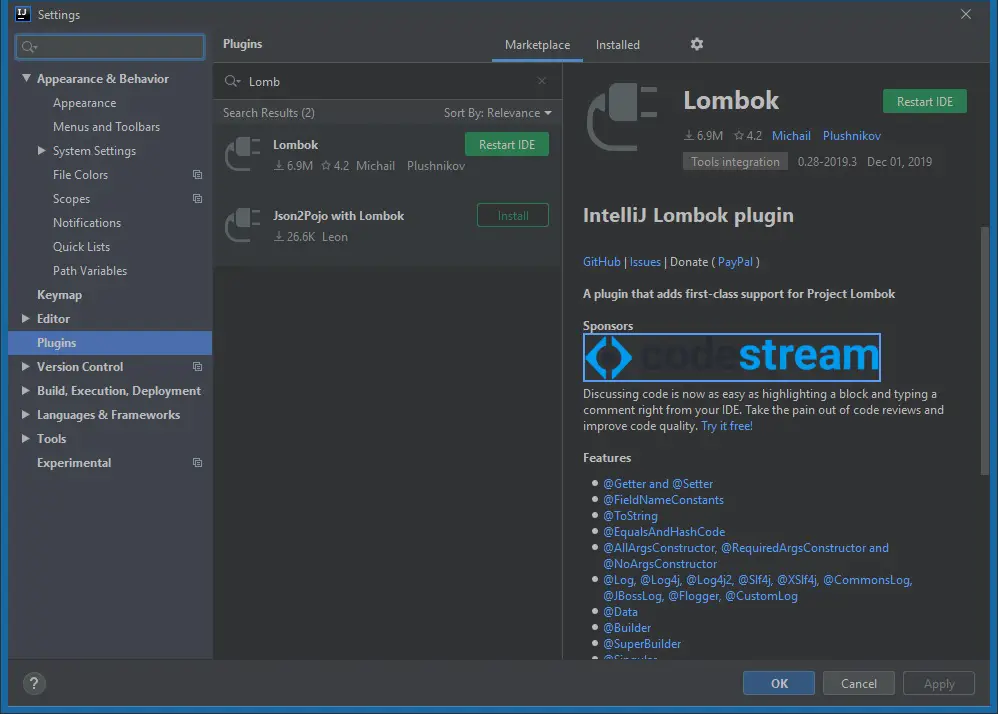
intellij-lombok-plugin
And the methods are recongnized in the Structure window:
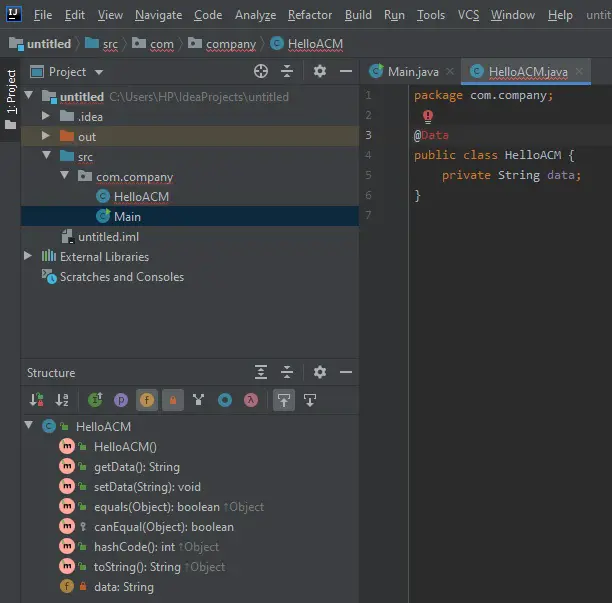
java-lombook-code
Lombok also supports the @Getter and @Setter if you want to make getters and setters for some particular fields, for example:
1 2 3 | public class HelloACM { private @Getter @Setter String data; } |
public class HelloACM {
   private @Getter @Setter String data;
}And this should enable you to use getData() and setData() methods.
–EOF (The Ultimate Computing & Technology Blog) —
推荐阅读:The Importance of Cybersecurity in Real Life The Best Productivity Trends and Hacks of 2015 3 Great New Ways Of Generating Money With Content Online Local SEO 101 For Law Firms [Infographic] Make Sure You’re On Top of Google’s Mobile-Friendly Algorithm Best Tools and Apps for Travel Bloggers On-Page Optimization Tips to Complement Your Great Content Responsive Design for Newbies [Infographic] Tips To Improving Website Runtime How to Insert into a Binary Search Tree (Recursive and Iterative
- 评论列表
-
- 添加评论