Depth First Search Algorithm to Delete Insufficient Nodes in Roo
- 时间:2020-09-11 08:17:29
- 分类:网络文摘
- 阅读:150 次
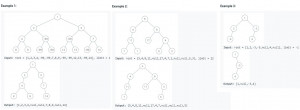
Given the root of a binary tree, consider all root to leaf paths: paths from the root to any leaf. (A leaf is a node with no children.) A node is insufficient if every such root to leaf path intersecting this node has sum strictly less than limit. Delete all insufficient nodes simultaneously, and return the root of the resulting binary tree.
insufficient-nodes-in-binary-tree
Example 1:
Input: root = [1,2,3,4,-99,-99,7,8,9,-99,-99,12,13,-99,14], limit = 1
Output: [1,2,3,4,null,null,7,8,9,null,14]Example 2:
Input: root = [5,4,8,11,null,17,4,7,1,null,null,5,3], limit = 22
Output: [5,4,8,11,null,17,4,7,null,null,null,5]Example 3:
Input: root = [1,2,-3,-5,null,4,null], limit = -1
Output: [1,null,-3,4]Note:
The given tree will have between 1 and 5000 nodes.
-10^5 <= node.val <= 10^5
-10^9 <= limit <= 10^9
DFS Algorithm: Passing the Limit From Root to Leaves
Let’s solve this in DFS (Depth First Search) Algorithm – which to be implemented in Recursion. The limit is passed down from the Root to the leaves. The terminating condition is when node is NULL which of course, we return NULL. And when node is a leaf node, we check if the value is small than the current limit – if yes, it is a insufficient node – which will be removed – return NULL.
Otherwise, recursively, we update the left and right child of the current node. And return NULL if both are NULL (meaning all the sub trees are removed).
C++:
1 2 3 4 5 6 7 8 9 10 11 12 13 14 15 16 17 18 19 20 21 22 | /** * Definition for a binary tree node. * struct TreeNode { * int val; * TreeNode *left; * TreeNode *right; * TreeNode(int x) : val(x), left(NULL), right(NULL) {} * }; */ class Solution { public: TreeNode* sufficientSubset(TreeNode* root, int limit) { if (!root) return root; if (root->left == nullptr && root->right == nullptr) { if (root->val < limit) return nullptr; return root; } root->left = sufficientSubset(root->left, limit - root->val); root->right = sufficientSubset(root->right, limit - root->val); return root->left || root->right ? root : nullptr; } }; |
/**
 * Definition for a binary tree node.
 * struct TreeNode {
 *     int val;
 *     TreeNode *left;
 *     TreeNode *right;
 *     TreeNode(int x) : val(x), left(NULL), right(NULL) {}
 * };
 */
class Solution {
public:
    TreeNode* sufficientSubset(TreeNode* root, int limit) {
        if (!root) return root;
        if (root->left == nullptr && root->right == nullptr) {
            if (root->val < limit) return nullptr;
            return root;
        }
        root->left = sufficientSubset(root->left, limit - root->val);
        root->right = sufficientSubset(root->right, limit - root->val);
        return root->left || root->right ? root : nullptr;
    }
};And Java:
1 2 3 4 5 6 7 8 9 10 11 12 13 14 15 16 17 18 19 20 21 22 23 24 25 | /** * Definition for a binary tree node. * public class TreeNode { * int val; * TreeNode left; * TreeNode right; * TreeNode(int x) { val = x; } * } */ class Solution { public TreeNode sufficientSubset(TreeNode root, int limit) { if (root == null) { return null; } if (root.left == root.right) { if (root.val < limit) { return null; } return root; } root.left = sufficientSubset(root.left, limit - root.val); root.right = sufficientSubset(root.right, limit - root.val); return root.left == root.right ? null : root; } } |
/**
 * Definition for a binary tree node.
 * public class TreeNode {
 *     int val;
 *     TreeNode left;
 *     TreeNode right;
 *     TreeNode(int x) { val = x; }
 * }
 */
class Solution {
    public TreeNode sufficientSubset(TreeNode root, int limit) {
        if (root == null) {
            return null;
        }
        if (root.left == root.right) {
            if (root.val < limit) {
                return null;
            }
            return root;
        }
        root.left = sufficientSubset(root.left, limit - root.val);
        root.right = sufficientSubset(root.right, limit - root.val);
        return root.left == root.right ? null : root;
    }
}We can test the equality for left and right node – if they are equal – then both nodes are NULL. The overall complexity is O(N) where N is the number of the nodes in the binary tree.
–EOF (The Ultimate Computing & Technology Blog) —
推荐阅读:人猪大战——小花猪4 网站建设容易忽略的6个地方 如何检查网站是否被竞争对手Negative SEO攻击? 站长创业经验分享 屌丝站长的平凡创业路 如何做让站长赚钱更容易?做好网站浏览体验 奇妙的虹吸现象|小学作文 布达拉宫|小学作文 难忘的一节课|小学作文 我们班的“接话王”|小学作文
- 评论列表
-
- 添加评论